

A short history of the mail
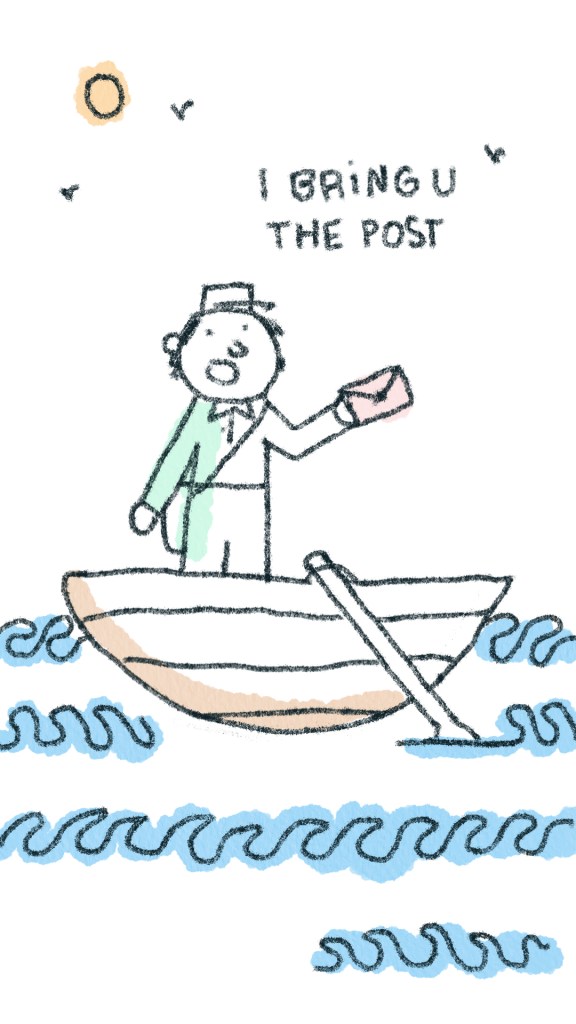
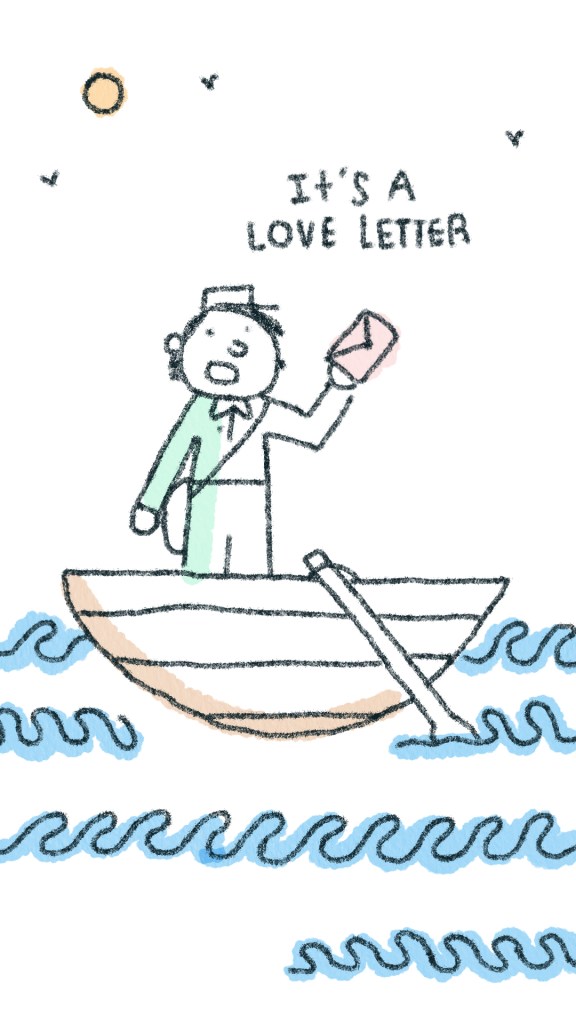
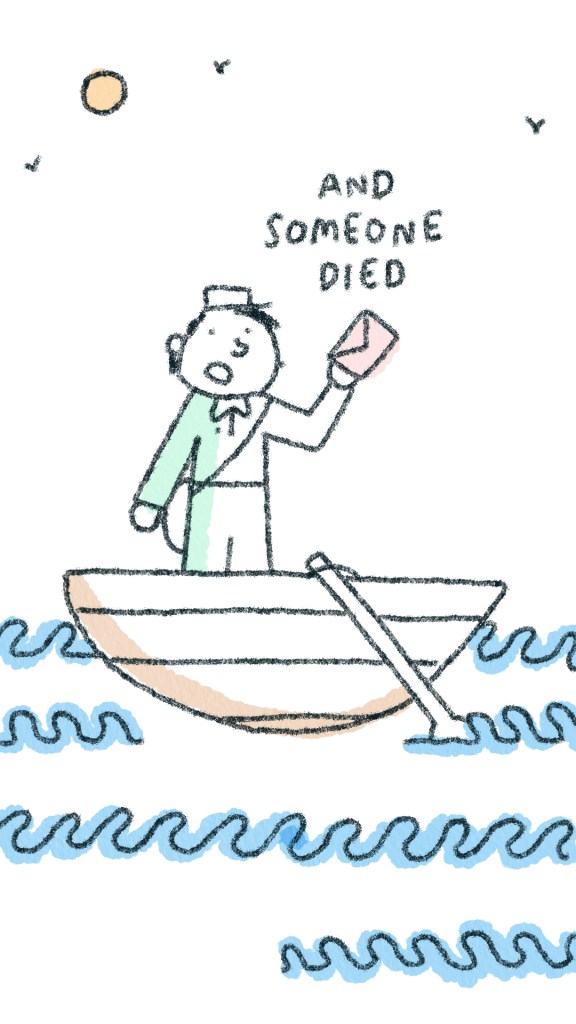
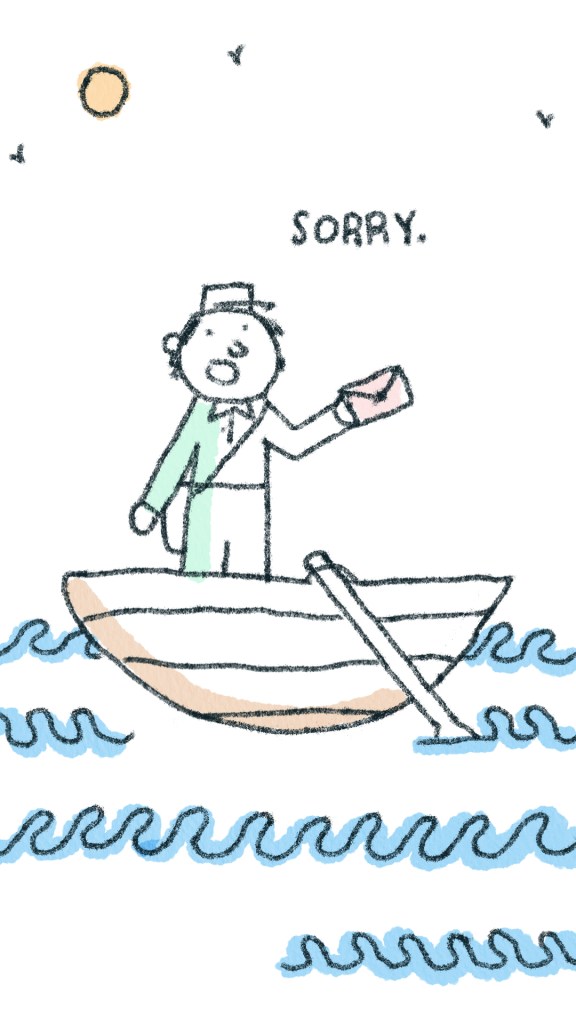
The other day I visited the National Museum in Bogota. And there was an exhibition about the colonial era. It accurately described the exoticism that Europeans gave to South America, the change of culture (or rather the imposition of cultures), the invasion of the church to the indigenous towns, and the customs adopted. Among them, the mail!
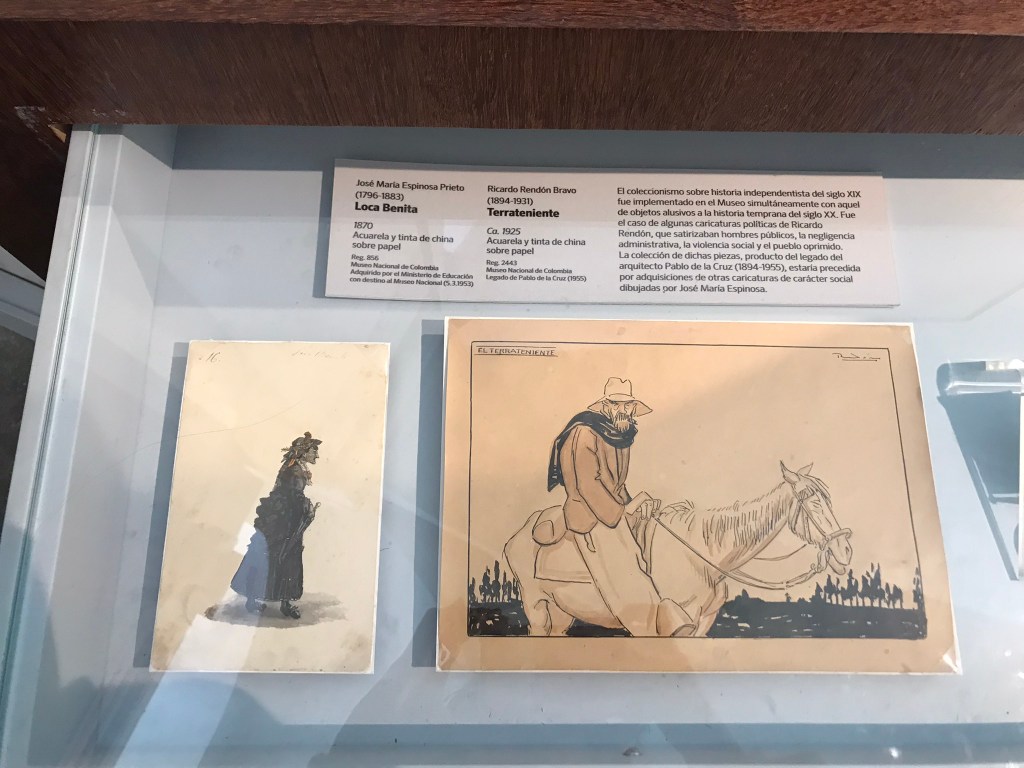
I found some artworks that show how before trucks, airplanes, and drones, there was the donkey and the canoe to carry mail.
I was curious. That’s why I love going to museums. They awaken in me so many ideas and thoughts that do not come from reading a book or watching a movie about the conquest. I think it is the respect and silence that haunts museums.
I made a ton of pictures, (promising to return to them). I I have not returned to them to them but I prefer my photo gallery full of museum pictures so they can save me in moments of need, like being in the toilet or a long wait without a book or internet.
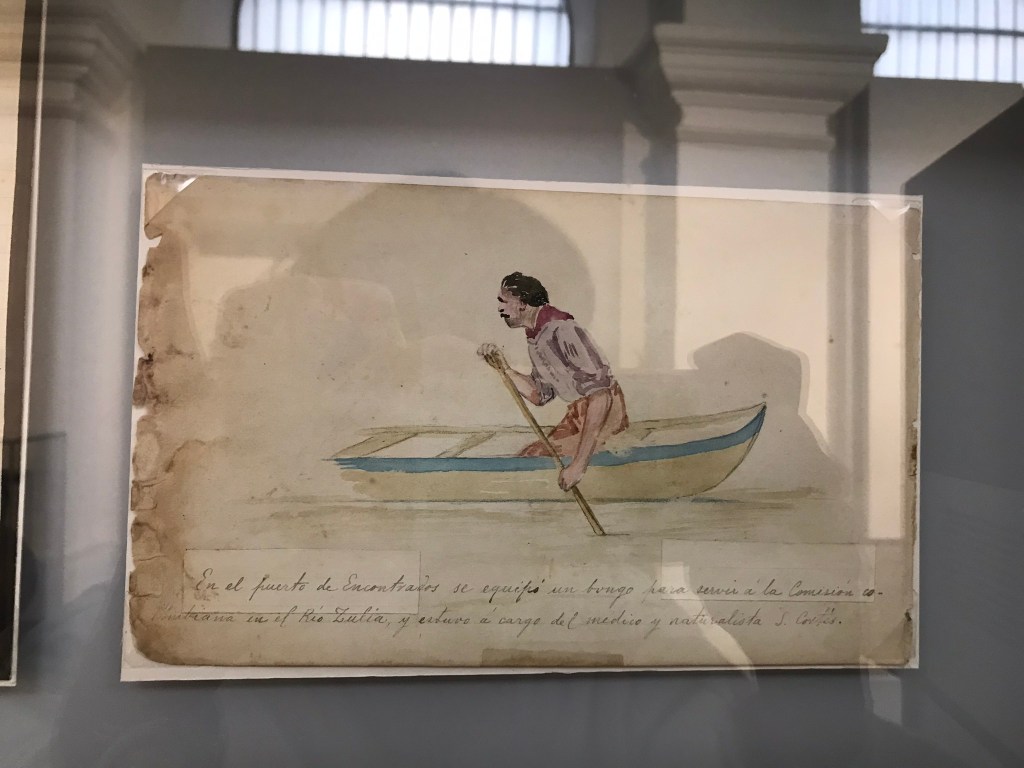
I wanted to investigate a little more about the history of the mail and its development. And, if we think about it, the mail was an inevitable thing. Sooner or later it was going to happen. The need to communicate with each other, migrations, travels, the desire to go far away but still have a little foot in the land of origin are the perfect scenarios for long-distance communication.
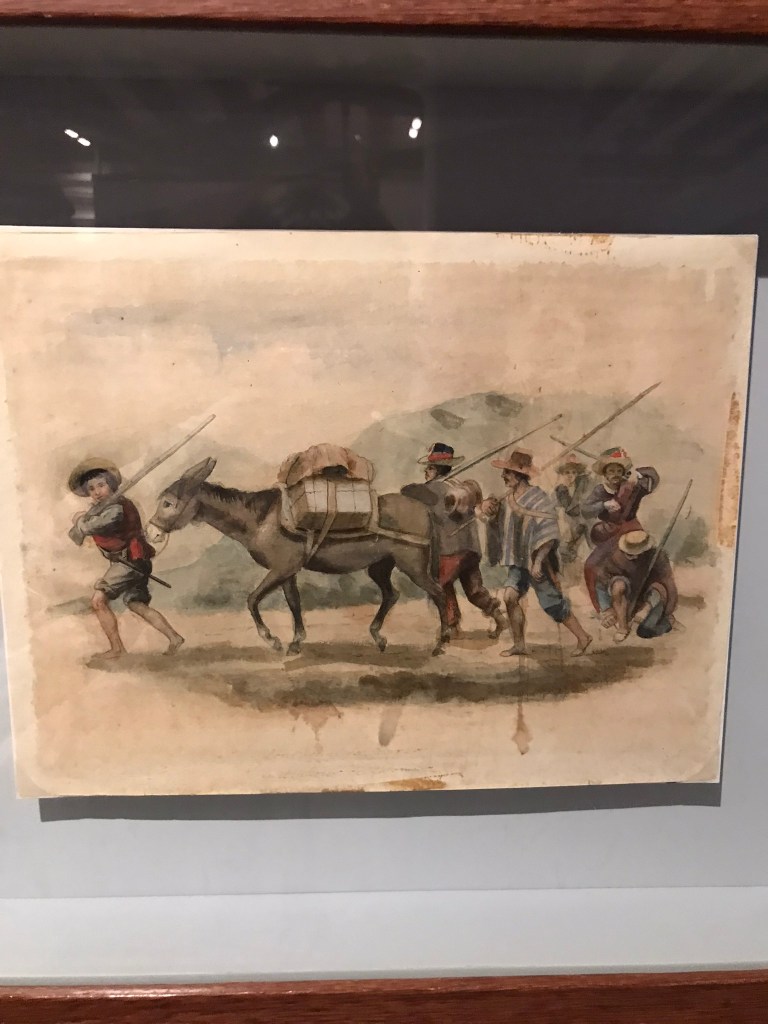
The first type of messaging dates back to ancient Egypt. Around 2000 BC. Horses and people on foot carried the heavy clay and stone tablets. Later, in Rome, the Cursus Publicus was created; several stations arranged on state routes exchanged couriers with each other.
Even in the Middle Ages, the postal system was very disorganized. It depended on monks, merchants, and royal senders. It is believed that the first effective communication network was in China, between 618 and 907 AD.
Moving to a more modern time, between the 16th and 17th centuries there were significant advances in postal services. Kings, kings, kings. Francis I of France established the Royal Mail in 1516 and in England, Charles I inaugurated the postal service, offering it to the population.
In the 19th century with the industrial revolution came the postal revolution. Thanks to the railroad and steamships, communication systems were now faster and more efficient.
Shortly after, in 1840, the Penny Post was invented in England. Its name was given because a penny was the cost of sending letters anywhere in the country. They were the first postage stamps and this service was implemented globally, due to its efficiency and economy.
In the 20th century, with the invention of the modern airplane, international delivery could be carried out quickly. In the second half of the 20th century, with the advent of information technology, the airplane was overtaken as the fastest method by e-mail. Since then, communication has not stopped changing. We are constantly looking for ways to get closer at a distance, in faster and more “real” ways, such as video calls or video games.
Nowadays the postal system in some countries is so good, that it allows tracking packages in real-time. A bit neurotic. But coming from Colombia, I understand the anxiety. Ordering something by mail in Colombia makes you get down on your knees and pray that your package doesn’t get lost on the way. I have corresponded with friends on other continents and these letters have never arrived. Although I have a dilemma with digital communications, I am grateful for the new technologies because they allow me to talk to my loved ones.
I think voice notes are modern letters. Much more than a text message. To me they are sonorous letters that tell important news and trivia, the speaker takes the listener through the space he or she walks through, whether it’s the street or the bathtub. Sometimes families or the wind intrude on the message. Usually one ends up stretching out, my longest voice memo record is 20 minutes, I once received a 45-minute voice memo! I love these podcasts that keep me company during the day.
Anyway, I still write handwritten letters whenever I can, as a thank you, apology, or show of love. I hold out hope that handwritten letters will become popular again. Accompanied by a memento in the form of a flower, rock or scent.
There is something mystical about a letter and I believe it is due to the sensory experience they give us. The smell of the paper and the ink, the sound created by rubbing against the paper, the witnesses of humanity in the form of a scratch and being able to treasure them in a drawer to discover them years later when the passage of time has already erased their memories and that old version of us. All this makes them irreplaceable.
Let’s write letters!
My Week on Senses
What have I been up to this week? A description of what my senses have felt!
👂I am all about music, all kinds of music. And video games music gets a very special place into my heart. Maybe is the epicness of it combined with some innocent tones.
👀 The National Museum of Bogotá was a jail before being a Museum. Here is a short video explaining its story.
👅Me and my love for corn ❤ Here is a delicious recipe on how to make “Arepa de Chocolo”
👐 My hands have not been that much into pencils 😦 Instead I spent a lot of time with friends I haven’t seen in a long time. So it’s fine. BUT I am back from travelling so expect more art soon!
👃 The smell of airplanes and airports. I love to travel but a hard thing for me is the fact that airports and planes don’t have open windows (for obvious reasons) and after a long intercontinental flight my lungs just desire some fresh air.

Again, thank you so so much for reading and your support.
🌟Recommend and subscribe to the newsletter! 🌟 I write weekly about stories, art, creativity, and processes.
 Tina Ovalle
Leave a comment